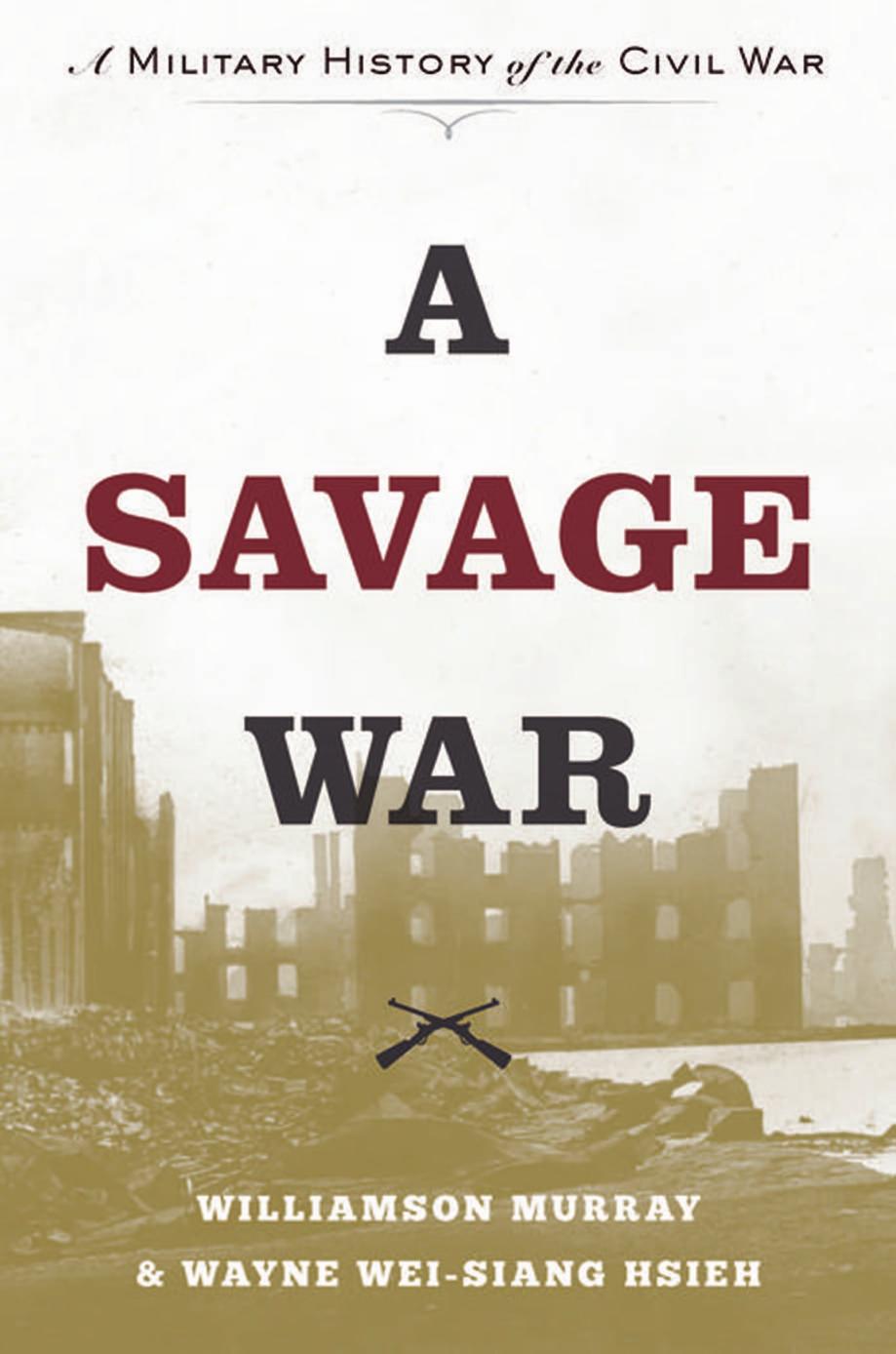
A Savage War by Williamson Murray
Author:Williamson Murray
Language: eng
Format: epub, pdf
ISBN: 9781400882908
Publisher: Princeton University Press
Published: 2017-02-16T05:00:00+00:00
As usual, Porter gave his full support, throwing his gunboats as well as the transports into the task of moving the troops across the Mississippi from Hard Times. To the delight of the Hoosiers who were the first to land, there were no Confederate troops on the opposite shore. There were the normal hiccups in such a move, but within a day McClernand’s and McPherson’s corps, 22,000 troops, were across. They began the drive into the state’s heartland. Sherman, although still opposed to the idea, was moving as fast as he could to reach the crossing. Grant was ecstatic. He recalled twenty years later: “I felt a degree of relief scarcely ever equalled since. Vicksburg was not yet taken it is true, nor were its defenders demoralized by any of our previous moves. … But I was on dry ground on the same side of the river with the enemy. All the campaigns, labors, hardships and exposures from the month of December previous to this time that had been made and endured, were for the accomplishment of this one object.”22 The swift movement of the Army of the Tennessee, largely guided by civilian soldiers, stands in stark contrast to those of the Army of the Potomac which, despite its relatively large contingent of McClellan-selected regulars, managed to forget the pontoons at Fredericksburg in December 1862.
What followed was the most impressive campaign of the Civil War. The major problem confronting Grant was that his army was numerically inferior to that of his opponents, if the Confederates united their forces. That proved to be a big “if.” Confederate commanders in the West proved unwilling to cooperate, favoring their own interests over larger strategic priorities, as well as proving incapable of timely action. The trouble started at the top with Jefferson Davis, who could not resist meddling in the affairs of his Western operational commanders. Johnston, who refused to provide clear operational guidance to Pemberton, must share in the blame for the Confederate defeats. Finally, Pemberton proved more interested in his administrative duties than in acting as a field commander. Thus, the Confederates failed to unite. Moreover, they were up against a commander willing to act. One might say the same about Grant, as one of the members of Britain’s military in World War II noted about Churchill’s arrival as prime minister on 10 May 1940: “The days of mere ‘coordination’ were out for good and all. … We were now going to get direction, leadership, action with a snap in it. … [As Churchill remarked] it was all very well to say that everything had been thought of. The crux of the matter was, had anything been done.”23 Just as McClellan and Buell had only talked of using the Tennessee and Cumberland Rivers as lines of operations in winter 1861/62, only Grant proved willing to act decisively in an environment rife with uncertainty and risk.
Almost as soon as he had his corps in hand, McClernand pushed inland. Early in the morning hours
Download
This site does not store any files on its server. We only index and link to content provided by other sites. Please contact the content providers to delete copyright contents if any and email us, we'll remove relevant links or contents immediately.
| Africa | Americas |
| Arctic & Antarctica | Asia |
| Australia & Oceania | Europe |
| Middle East | Russia |
| United States | World |
| Ancient Civilizations | Military |
| Historical Study & Educational Resources |
Cat's cradle by Kurt Vonnegut(15380)
Pimp by Iceberg Slim(14535)
4 3 2 1: A Novel by Paul Auster(12413)
Underground: A Human History of the Worlds Beneath Our Feet by Will Hunt(12105)
The Radium Girls by Kate Moore(12042)
Wiseguy by Nicholas Pileggi(5799)
The Fire Next Time by James Baldwin(5458)
Perfect Rhythm by Jae(5419)
American History Stories, Volume III (Yesterday's Classics) by Pratt Mara L(5316)
Paper Towns by Green John(5201)
Pale Blue Dot by Carl Sagan(5019)
A Higher Loyalty: Truth, Lies, and Leadership by James Comey(4972)
The Mayflower and the Pilgrims' New World by Nathaniel Philbrick(4511)
The Doomsday Machine by Daniel Ellsberg(4496)
Killers of the Flower Moon: The Osage Murders and the Birth of the FBI by David Grann(4454)
The Sympathizer by Viet Thanh Nguyen(4403)
Too Much and Not the Mood by Durga Chew-Bose(4359)
The Borden Murders by Sarah Miller(4335)
Sticky Fingers by Joe Hagan(4209)
